
AI in insurance claims is fundamentally changing the industry by delivering faster processing, smarter fraud detection, and more consistent outcomes. This technology automates routine tasks, freeing up human adjusters to focus on complex cases and provide policyholders with personal support where it matters most.
Table of contents
- How AI is Reshaping the Insurance Claims Process
- The Step-by-Step Impact of AI on Your Claim
- Benefits vs. Challenges of AI in Insurance Claims
- How Insurers Ensure Fairness with AI in Claims
- Frequently asked questions
How AI is Reshaping the Insurance Claims Process
Artificial intelligence is fundamentally reshaping insurance claims by automating data intake, analysis, and routine decision-making, which drastically reduces the time from filing to settlement. Instead of relying solely on manual review, insurers now use AI models to instantly read documents, analyze damage from images, and cross-reference a claim against policy details and historical data. This allows straightforward claims to be processed in hours or even minutes, freeing up human experts to handle claims that require nuanced judgment and empathy.
At its core, the technology works through a combination of machine learning and specialized AI applications:
- Computer Vision: This allows an AI to "see" and interpret images and videos. When you upload photos of a dented bumper after an accident, computer vision algorithms can identify the parts damaged, assess the severity, and even estimate repair costs by comparing the images to a vast database of previous claims.
- Natural Language Processing (NLP): NLP gives machines the ability to understand human language. It's the technology behind chatbots that guide you through filing a First Notice of Loss (FNOL) and the software that can read a contractor's report, extract key details, and populate the claim file automatically, eliminating manual data entry.
- Predictive Analytics: By analyzing patterns in historical claims data, predictive models can identify claims with a high probability of fraud, flagging them for human review. They can also forecast the likely total cost of a complex claim, helping insurers set appropriate reserves.
These tools work in concert to create a more efficient workflow, augmenting the capabilities of human claims adjusters rather than completely replacing them.
The Step-by-Step Impact of AI on Your Claim
AI impacts the claims process by introducing speed and precision at every stage, from the moment you file to the final payout. For policyholders, this means a clearer and often faster experience, especially for common claim types. The system is designed to handle high-volume, low-complexity tasks, allowing human adjusters to focus on what they do best: manage intricate cases and communicate with clients.
Here’s a breakdown of the key stages where AI makes a tangible difference:
-
First Notice of Loss (FNOL): Instead of waiting on hold, many policyholders can now start a claim 24/7 through a mobile app or website. AI-powered chatbots guide you through the initial questions, use NLP to understand your description of the event, and prompt you for necessary photos or documents. This ensures all required information is collected correctly from the start.
-
Automated Damage Triage & Assessment: This is one of the most significant applications. For a minor fender-bender, you might upload photos and receive a preliminary repair estimate within minutes. The AI analyzes the images, identifies the damage, and queries a parts database to calculate the cost. This “touchless” approach can settle simple claims for car insurance in Gilbert and surrounding areas without ever needing a human adjuster's direct review.
-
Fraud Detection: AI algorithms are exceptionally good at spotting anomalies that a human might miss. They can flag suspicious patterns, such as multiple similar claims filed in a short period, inconsistencies between a claimant's report and the physical evidence, or billing irregularities from a repair shop. This helps keep costs down for everyone by reducing fraudulent payouts.
-
Policy & Document Analysis: When a major event occurs, like a fire affecting your home, the claim involves numerous documents, from police reports to receipts for temporary living expenses. AI can scan and digitize these unstructured documents, extracting the relevant information and verifying it against your Arizona homeowners insurance policy to confirm coverage.
Benefits vs. Challenges of AI in Insurance Claims
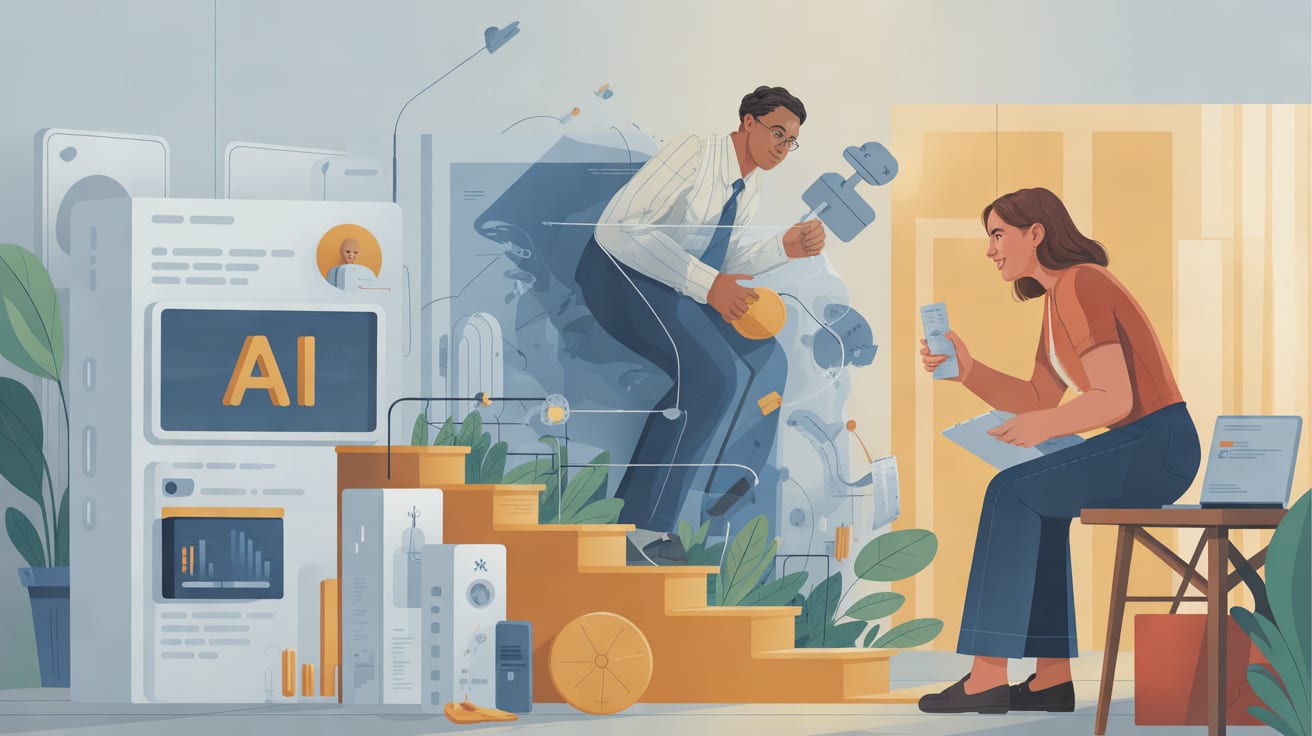
The primary benefit for policyholders is a faster, more convenient claims experience, but this efficiency comes with challenges, including concerns about algorithmic bias and the loss of human interaction. Understanding this trade-off is key to navigating the modern insurance landscape. While a straightforward auto claim might be perfectly suited for an automated process, a complex liability claim from your business insurance in Arizona policy will always benefit from human expertise.
Here’s a comparison of the AI-enhanced process versus the traditional approach:
| Feature | Traditional Claims Process | AI-Enhanced Claims Process |
|---|---|---|
| Initial Filing | Manual data entry from phone calls or forms during business hours. | 24/7 automated data capture via apps, chatbots, and photo analysis. |
| Processing Speed | Days to weeks, dependent on adjuster workload and mail times. | Minutes to hours for simple claims; days for complex ones. |
| Decision Consistency | Can vary based on the individual adjuster's experience and judgment. | Highly consistent, based on data-driven models analyzing thousands of similar past claims. |
| Human Interaction | The primary point of contact throughout the entire process. | Focused on complex issues, escalations, customer support, and final approvals. |
| Potential Drawback | Slower, less convenient, and prone to human error in data entry. | Risk of “black box” decisions, potential for algorithmic bias, and can feel impersonal. |
How Insurers Ensure Fairness with AI in Claims
Insurers ensure fairness by implementing a Human-in-the-Loop (HITL) framework, conducting regular audits of their AI models, and adhering to regulatory guidelines designed to protect consumers. An AI can suggest a decision, but for any non-standard or denied claim, a human adjuster is ultimately responsible for the final judgment. This oversight is critical for catching errors, correcting for biases, and handling the unique context of each policyholder's situation.
A Human-in-the-Loop (HITL) system is a model that combines machine intelligence with human intelligence. In claims processing, this means an AI system might flag a claim for review, suggest a settlement amount, or identify potential fraud, but a human adjuster makes the final decision, ensuring oversight and context.
Here are the core pillars of maintaining fairness:
- Robust Auditing: Insurance companies continually test their AI models against historical data to check for unintended biases related to geography, age, or other demographic factors. If a model is found to be producing unfair outcomes, it is retrained and corrected.
- Transparency and Explainability: While some AI models can be a "black box," regulators are increasingly demanding that insurers be able to explain why an AI made a particular recommendation. This pushes companies to use more transparent models or develop tools that can interpret and justify an algorithm's output.
- Clear Escalation Paths: If a policyholder disagrees with an AI-assisted decision, there must be a clear and accessible process to have the claim reviewed by a human manager. Your right to appeal a decision and speak with a person does not disappear just because technology is involved.
At Boone Insurance Group, we serve as your advocate in this process. We can help you understand the decisions being made and ensure your claim for anything from workers compensation insurance in Arizona to a personal umbrella policy is handled fairly.
While AI streamlines the process, the need for an expert human advocate remains essential. At Boone Insurance Group, we help you navigate these changes, understand your policy, and ensure you're treated fairly. Contact us to review your coverage for the future of insurance.
Frequently asked questions
How is AI being used in the insurance industry? AI is used across the insurance industry to automate and enhance processes like underwriting, risk assessment, customer service via chatbots, and, most significantly, claims processing. It helps analyze data to set premiums, detects fraudulent activity, and speeds up claim settlements by automatically assessing damage and handling administrative tasks.
What is the main role of artificial intelligence? The main role of artificial intelligence is to enable machines to perform tasks that typically require human intelligence, such as learning, reasoning, problem-solving, and understanding language. In a business context like insurance, its primary role is to analyze vast amounts of data to identify patterns, automate repetitive tasks, and provide data-driven insights to support human decision-making.
Can I dispute a claim decision made by an AI? Yes, absolutely. Policyholders always have the right to dispute any claim decision, regardless of whether it was assisted by AI. Insurers are required to have clear processes for human review and appeal. If you disagree with a settlement offer or a denial, you should immediately contact your insurance agent or the carrier's claims department to have a human adjuster re-evaluate your case.
Does AI replace my insurance agent? No, AI does not replace your insurance agent. AI tools are designed to handle data processing and routine administrative tasks, but they cannot provide personalized advice, understand your unique life circumstances, or advocate on your behalf during a complex claim. An agent provides the human expertise, strategic guidance, and client relationship that technology cannot replicate.
What is an example of an AI policy? An AI policy, in a corporate context, is a set of internal guidelines and principles that govern how a company uses artificial intelligence. For an insurer, this policy would dictate rules for data privacy, ensuring AI models are tested for bias, defining when human oversight is required (like for denied claims), and maintaining compliance with insurance regulations. It's a framework for using AI responsibly and ethically.
Will AI make my insurance premiums more expensive? Not necessarily. In some ways, AI could help lower premiums over time. By reducing fraud and increasing operational efficiency, insurers can lower their costs, and those savings can be passed on to customers. However, AI also enables more precise risk assessment (telematics, for example), so premiums will become more individualized. High-risk behaviors could lead to higher rates, while safe behaviors could be rewarded with lower ones.
What are the 7 pillars of insurance? The seven fundamental principles, or pillars, of insurance are: Utmost Good Faith (both parties must be truthful), Insurable Interest (you must have a financial stake in the insured item), Proximate Cause (the loss must be caused by an insured peril), Indemnity (you should be restored to your original financial position, not profit), Subrogation (the insurer can pursue the at-fault party), Contribution (multiple insurers covering the same item share the loss), and Loss Minimization (you must take steps to minimize the damage).