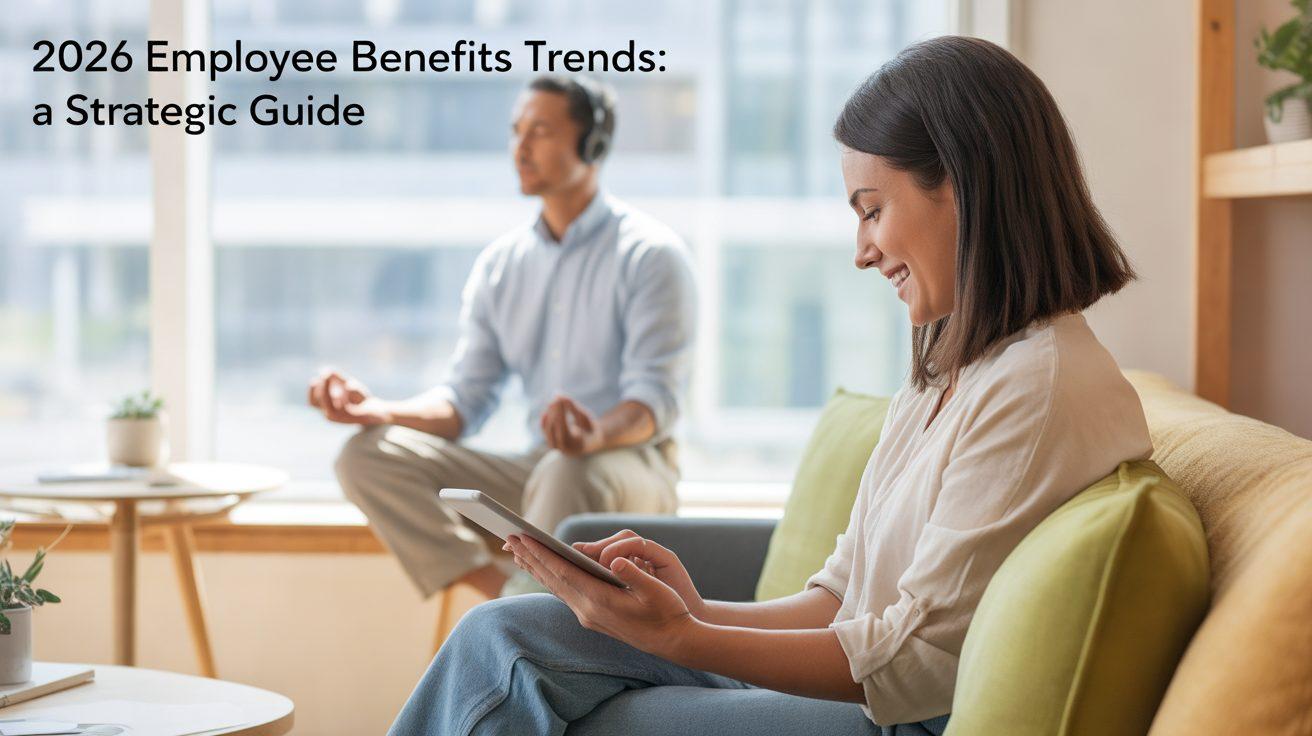
The most impactful employee benefits trends for 2026 move beyond basic perks to focus on holistic wellness programs that attract and retain top talent. At Boone Insurance Group, we see businesses succeeding by integrating mental, financial, and physical health support into a single, personalized experience for their teams.
Table of contents
- What Defines Holistic Wellness in 2026 Benefits Packages?
- What Are the Top Employee Benefits Trends for 2026?
- How Can Businesses Strategically Evaluate New Employee Benefits?
- How Do the Latest Employee Benefits Trends for 2026 Impact Talent Retention?
- Frequently asked questions
What Defines Holistic Wellness in 2026 Benefits Packages?
In 2026, holistic wellness in benefits packages means the strategic integration of physical health, mental and emotional support, and financial well-being into a cohesive program that recognizes how interconnected these parts of an employee's life are. This approach moves beyond traditional health insurance to address the root causes of stress and burnout. It views an employee as a whole person, acknowledging that financial anxiety can manifest as physical illness and that mental health struggles can impact workplace productivity.
Definition: A Holistic Wellness Program is an employer-sponsored benefits strategy that provides resources and support across the full spectrum of an employee's well-being—physical, emotional, mental, and financial—with the goal of improving health outcomes, reducing stress, and increasing overall engagement and productivity.
Key components include:
- Mental & Emotional Health: Support has expanded far beyond the basic Employee Assistance Program (EAP). It now includes direct access to virtual and in-person therapy with low or no co-pays, subscriptions to mindfulness and meditation apps (like Calm or Headspace), and dedicated training for managers on how to support their team's mental well-being without overstepping boundaries.
- Physical Health: While comprehensive medical, dental, and vision coverage remains the foundation, the focus is shifting towards proactive and convenient care. This includes expanded access to telehealth for primary and specialist care, incentives for preventative screenings, and wellness programs that reward healthy behaviors like consistent exercise and proper nutrition.
- Financial Wellness: This is arguably the fastest-growing pillar. Employers recognize that financial stress is a leading cause of distraction and absenteeism. Modern benefits include student loan repayment assistance programs, employer-sponsored emergency savings accounts, free access to certified financial planners, and educational workshops on topics like budgeting, investing, and retirement planning.
What Are the Top Employee Benefits Trends for 2026?
The leading employee benefits trends for 2026 are defined by hyper-personalization, technology-driven accessibility, and robust support for caregivers. These trends reflect a deeper understanding that a one-size-fits-all approach is no longer effective for a diverse, multi-generational workforce. Employers are using flexible benefits and digital platforms to provide meaningful support that adapts to individual employee needs.
1. Hyper-Personalization through Spending Accounts: Employees now expect choices that fit their unique life stages and priorities. Lifestyle Spending Accounts (LSAs) are gaining significant traction as a flexible, post-tax benefit. Unlike a Health Savings Account (HSA) which is restricted to qualified medical expenses, an LSA can be used for a wide range of wellness-related expenses defined by the employer, such as gym memberships, pet insurance, financial planning sessions, or even home office equipment. This level of choice empowers employees and demonstrates a company’s commitment to their overall well-being.
2. Comprehensive Caregiving Support: The pandemic highlighted the immense pressure on employees with caregiving responsibilities, and leading employers are responding. Benefits in this area now include subsidized backup childcare, access to platforms for finding vetted elder care providers, paid parental leave for all parents, and flexible work arrangements that allow employees to manage family obligations without sacrificing their careers. This support is critical for retaining experienced employees who might otherwise be forced to leave the workforce.
3. Seamless Digital Health Integration: Technology is making benefits easier to understand and use. AI-powered platforms can help employees navigate their complex benefits options, find in-network providers, and get cost estimates for procedures. Virtual Primary Care (VPC) is also becoming a staple, offering a convenient and low-cost first point of contact for non-emergency medical issues. This digital-first approach not only improves access but can also help contain long-term healthcare costs for the business. The same AI that is transforming core business operations, like in AI in insurance underwriting, is now personalizing the employee experience.

How Can Businesses Strategically Evaluate New Employee Benefits?
To strategically evaluate new employee benefits, businesses must conduct a thorough analysis of workforce demographics, directly surveying employee needs, calculating the potential return on investment (ROI) using metrics like retention and productivity, and assess administrative feasibility. A new benefit is only successful if it is valued by employees and sustainable for the company. The goal is to move from guessing what employees want to making data-informed decisions.
To make a sound decision, leadership should consider several factors. The following table provides a framework for comparing potential new benefit offerings:
| Benefit Option | Cost to Employer | Impact on Retention | Administrative Burden | Employee Perceived Value | Scalability |
|---|---|---|---|---|---|
| Student Loan Repayment | Moderate to High | High (especially for younger talent) | Moderate (requires third-party admin) | Very High | High (can set contribution caps) |
| Lifestyle Spending Account (LSA) | Low to High (flexible budget) | High | Low to Moderate (depends on platform) | Very High (due to flexibility) | Very High (easy to adjust budgets) |
| Expanded Mental Health Network | Moderate | Very High | Low (managed by insurance carrier) | High (addresses a critical need) | High |
| Subsidized Backup Childcare | Moderate | Very High (for working parents) | Moderate (partner with a service) | Extremely High (for users) | Moderate (depends on provider network) |
This evaluation process should be part of a larger benefits strategy, which is a core component of your overall risk management and business insurance. A well-designed benefits plan protects your most valuable asset: your people.
How Do the Latest Employee Benefits Trends for 2026 Impact Talent Retention?
The latest employee benefits trends for 2026 boost talent retention by addressing the primary drivers of burnout and turnover—financial stress, mental health challenges, and work-life imbalance. When companies offer this comprehensive support, they demonstrate a genuine investment in their employees' long-term well-being, fostering a culture of loyalty that transcends salary alone. When an employee feels cared for as a person, they are more engaged, more productive, and significantly less likely to explore other opportunities.
This strategic shift in benefits creates a powerful competitive advantage in the war for talent. Top candidates actively compare benefits packages, and a company offering student loan assistance or robust mental health coverage will stand out against one that does not. Furthermore, benefits that reduce life stress—like caregiving support—directly prevent valuable, experienced employees from leaving the workforce. This not only saves on recruitment and training costs but also maintains institutional knowledge and team stability.
Ultimately, a modern benefits strategy is a direct investment in your company's human capital. It functions alongside foundational protections like workers compensation insurance in Arizona to create a safe, supportive, and resilient workplace where employees can thrive.
Ready to design a 2026 benefits package that attracts and retains the best talent for your business? Contact the experts at Boone Insurance Group today to explore customized solutions that align with your company's goals.
Frequently asked questions
What is the most significant shift in employee benefits for 2026? The most significant shift is the move towards holistic and personalized wellness. Instead of offering disconnected perks, employers are integrating physical, mental, and financial health benefits into a single, cohesive strategy to support the whole employee, which is a key factor in attracting and retaining talent.
Are personalized benefits like Lifestyle Spending Accounts (LSAs) expensive for small businesses? LSAs are highly scalable and can be cost-effective for small businesses. Employers have complete control over the budget, setting a specific amount per employee (e.g., $50 or $100 per month). This predictability makes them a financially manageable way to offer the flexible, personalized benefits that employees value.
How does offering financial wellness benefits help the employer? Financial wellness benefits help employers by reducing employee stress, which is a major cause of absenteeism, distraction, and low productivity. By helping employees manage debt, save for emergencies, and plan for the future, companies can increase focus, improve morale, and boost retention rates.
Why is mental health support now a critical part of a modern benefits package? Mental health support is critical because it directly addresses widespread issues of burnout, anxiety, and depression that impact employee well-being and job performance. Providing accessible and affordable mental healthcare shows that a company cares about its employees and helps create a healthier, more resilient workforce.
How can a company measure the ROI of its benefits package? A company can measure the ROI of its benefits package by tracking key metrics such as employee turnover rates, absenteeism, and productivity levels before and after implementing new benefits. Employee engagement surveys and tracking the utilization rates of specific benefits can also provide valuable insight into their impact.