In 2026, commercial auto telematics directly impacts insurance premiums by allowing insurers to use granular driver data to reward safe fleets with lower rates. This moves underwriting beyond traditional factors, creating a dynamic system of real-time risk assessment that can significantly reduce your costs through proactive loss prevention.
Table of contents
- What is Commercial Auto Telematics and How Does It Work?
- How Does Telematics Data Directly Influence Commercial Auto Premiums?
- What Specific Driving Behaviors Do Insurers Analyze?
- How Can My Business Use Telematics to Lower Insurance Premiums?
- How Do I Choose the Right Telematics Solution for My Fleet?
- Frequently asked questions
What is Commercial Auto Telematics and How Does It Work?
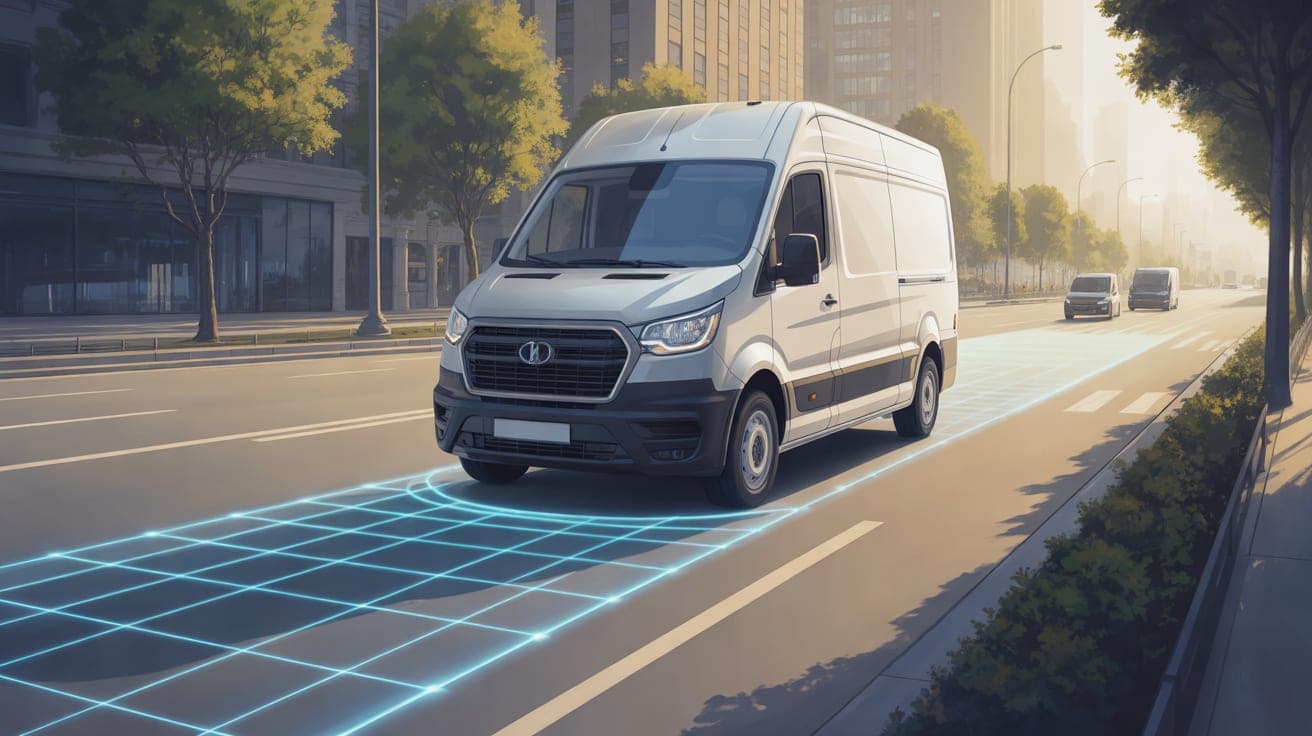
Commercial auto telematics is a technology that captures and transmits vehicle and driver performance data in real time. It operates using a small device, often plugged into a vehicle's On-Board Diagnostics (OBD-II) port or hardwired to the engine. This device, containing a GPS receiver and an accelerometer, collects data points like speed, location, acceleration, braking force, and cornering. It then transmits this information via a cellular network to a central server, where fleet managers and insurance carriers can analyze it through a software dashboard to monitor driving patterns and vehicle health.
At its core, the system provides a detailed, objective record of how, when, and where your company's vehicles are operated. This transitions risk assessment from a model based on historical averages and proxies (like driver age or vehicle type) to one founded on actual, observable behavior. For insurers, this data provides a much clearer and more accurate picture of a fleet's true risk profile.
How Does Telematics Data Directly Influence Commercial Auto Premiums?
Telematics data directly influences commercial auto premiums by enabling insurers to offer usage-based insurance (UBI) models. These models price policies on real-world driving behavior rather than industry averages. Instead of relying solely on your fleet's loss history, underwriters analyze telematics data to generate a safety score for each driver and the fleet as a whole. This score becomes a primary rating factor, often allowing for premium adjustments at renewal or even mid-term.
The mechanism is straightforward: an insurer's algorithm processes the raw data and weights specific events based on context. For example, a single hard-braking event in dense urban traffic like Phoenix might be weighted less than a pattern of late-night speeding. The algorithm assesses factors including:
- Driving Behaviors: Speeding, hard acceleration, harsh braking, and sharp cornering are red flags that correlate strongly with increased accident frequency.
- Time and Day of Operation: Driving during rush hour or late at night often carries a higher statistical risk than operating during standard business hours.
- Mileage: Higher mileage generally means more time on the road and, therefore, greater exposure to potential accidents.
- Location (Geofencing): The routes your drivers take matter. Consistent operation in high-accident zones can elevate a fleet's risk score.
Fleets that demonstrate consistently safe driving habits are rewarded with lower premiums, as they are statistically less likely to file claims. Conversely, fleets with poor safety scores will see their premiums increase to reflect their higher demonstrated risk. This creates a powerful financial incentive for businesses to actively manage driver safety as a core part of a comprehensive business insurance arizona strategy.
What Specific Driving Behaviors Do Insurers Analyze?
Insurers analyze a specific set of driving behaviors that are statistically proven to be leading indicators of collision risk. While the exact formula varies between carriers, the most scrutinized actions are speed, acceleration, and braking. Harsh events in these categories suggest aggressive or distracted driving, which dramatically increases the likelihood of an at-fault accident. A driver who frequently brakes hard, for instance, is likely following other vehicles too closely.
Beyond these core metrics, insurers also examine:
- Cornering: Aggressive cornering at high speeds can indicate a risk of rollover or loss of control, a major concern for larger commercial vehicles.
- Idling: While not a direct collision risk, excessive idling wastes fuel and can point to inefficient routing or unauthorized stops, which may signal a poorly managed fleet.
- Seatbelt Use: Many telematics devices now report on seatbelt engagement. This is a critical safety factor, as failure to wear a seatbelt drastically increases injury severity in an accident, leading to larger claims, especially within workers compensation insurance arizona.
- Device Tampering: Any attempt to unplug or disable a telematics device is a major red flag. It suggests a driver is trying to hide risky behavior and can lead to immediate policy review or non-renewal.
By monitoring these specific data points, underwriters build a highly accurate, evidence-based profile of your fleet’s operational risk.
How Can My Business Use Telematics to Lower Insurance Premiums?
To use telematics to lower your insurance premiums, your business must treat the data not just as an insurance requirement but as a core fleet management tool. The key is creating a proactive feedback loop where data is used to coach drivers and improve your safety culture. Merely installing the devices is not enough; active engagement is what drives savings.
Here are actionable steps to take:
- Establish Clear Safety Policies: Create a formal, written policy that defines your company's safe driving standards. Detail what constitutes speeding, harsh braking, and other monitored behaviors, and explain how telematics data will be used to ensure compliance.
- Implement a Driver Coaching Program: Use the telematics dashboard to identify drivers with the highest-risk behaviors. Schedule regular, one-on-one sessions to review their performance scorecards. Focus on specific events, using trip replays to show them exactly where and when a risky maneuver occurred. Frame these conversations constructively around improvement, not punishment.
- Use Gamification and Incentives: Foster friendly competition with leaderboards that rank drivers by safety score. Reward top performers with bonuses, gift cards, or public recognition. Positive reinforcement is a powerful motivator for sustained behavioral change.
- Integrate with Maintenance Schedules: Use vehicle diagnostic data from the telematics device, such as engine fault codes, to schedule proactive maintenance. A well-maintained vehicle is a safer vehicle, and demonstrating proactive upkeep is a positive signal to underwriters.
- Review High-Risk Routes: If data shows that accidents or near-misses are clustered in certain areas, analyze those routes. You may be able to reroute drivers to avoid dangerous intersections or congested corridors, reducing overall risk exposure.
By actively managing your fleet with telematics data, you are building a powerful case for your business being a low-risk partner for your insurer. You are demonstrating a commitment to safety that underwriters value highly in today's commercial auto market.
How Do I Choose the Right Telematics Solution for My Fleet?
Choosing the right telematics solution requires you to balance cost, ease of installation, and the specific data points your business and insurer require. The ideal choice depends on your fleet's size, vehicle types, and management goals. For example, a local delivery service in Gilbert has different needs than a long-haul trucking company, which can influence the most suitable type of auto insurance policy.
Consider the primary types of telematics hardware and software available:
| Solution Type | Key Features | Best For | Potential Drawbacks |
|---|---|---|---|
| OBD-II Plug-in | Self-installed in seconds; captures standard driving data; low upfront cost. | Small to medium fleets with standard passenger cars, vans, or light trucks. | Can be easily tampered with or unplugged; may offer less granular data. |
| Hardwired Device | Professionally installed; tamper-resistant; can connect to other sensors. | Fleets of any size requiring high data accuracy and security, heavy-duty trucks. | Higher installation cost and vehicle downtime; less portable. |
| Smartphone App | No hardware cost; uses phone's GPS and sensors; easy to deploy. | Businesses with independent contractors or employees using personal vehicles. | Drains phone battery; accuracy can vary; raises privacy concerns. |
| OEM Embedded | Built into the vehicle by the manufacturer; seamless integration. | Businesses purchasing new vehicles with factory-installed telematics systems. | Data access may be controlled by the manufacturer; less customizable. |
When evaluating providers, ask about their data security protocols, customer support, and experience integrating with insurance carriers. A good provider acts as a partner, helping you not only collect data but also understand how to use it effectively to improve safety and reduce costs.
Transforming your fleet's data into measurable insurance savings requires a strategic approach. The team at Boone Insurance Group can help you navigate the options and align your fleet management practices with the expectations of top commercial auto carriers. Contact us today for a comprehensive review of your commercial auto insurance needs.
Frequently asked questions
What is the primary goal of commercial auto telematics for an insurer? The primary goal for an insurer is to more accurately price risk. By collecting real-world data on driving behaviors, mileage, and vehicle usage, insurers can move away from pricing based on industry averages and instead base premiums on the demonstrated safety and operational profile of a specific fleet.
Does using telematics guarantee a lower commercial auto insurance premium? No, it does not guarantee a lower premium. While fleets with excellent safety records are likely to see significant discounts, fleets that exhibit risky driving behaviors (such as frequent speeding or hard braking) may actually see their premiums increase at renewal. Telematics provides an objective measure of risk, which can work for or against a business.
How is driver privacy protected with telematics systems? Driver privacy is protected through strict data security policies and transparent communication. Businesses should have a formal policy explaining what data is collected, how it will be used for coaching and insurance purposes, and that it will not be used for surveillance outside of work hours. Reputable telematics providers use encryption and secure servers to protect the data they manage.
Can telematics data be used against my driver in an accident investigation? Yes, telematics data can be subpoenaed and used in legal proceedings following an accident. The data provides an objective record of the vehicle's speed, location, and braking activity leading up to an incident, which can be used to either support or challenge a driver's account of events.
What is the difference between telematics and a simple GPS tracker? A simple GPS tracker primarily reports a vehicle's location. Telematics systems do much more; in addition to GPS location, they use accelerometers and direct connections to the vehicle's engine computer to capture a wide range of data about driving behavior (speeding, braking, cornering) and vehicle health (engine diagnostics, fuel consumption).
Is the installation of telematics devices difficult or time-consuming? Installation varies by device type. OBD-II plug-in devices are extremely simple and can be installed by the driver in under a minute without any tools. Hardwired devices are more complex and require professional installation, which can take an hour or more and may require scheduling service for each vehicle in your fleet.